English
 Quốc Ngữ
 Bahasa Indonesia
 Português
 Bahasa Melayu
 Amharic
 urdu
urdu
 हिन्दी或हिंदी


High-voltage power transmission relies heavily on the physical integrity of its supporting hardware. While a great deal of attention is given to the conductive cables and transformers, the connection points—specifically the clamps that secure and tap into tubular busbars—are often where electrical reliability meets mechanical vulnerability. The latest iteration of tubular busbar clamps, exemplified by split-design metal fittings, seeks to bridge this gap through a combination of rugged construction and precise engineering.
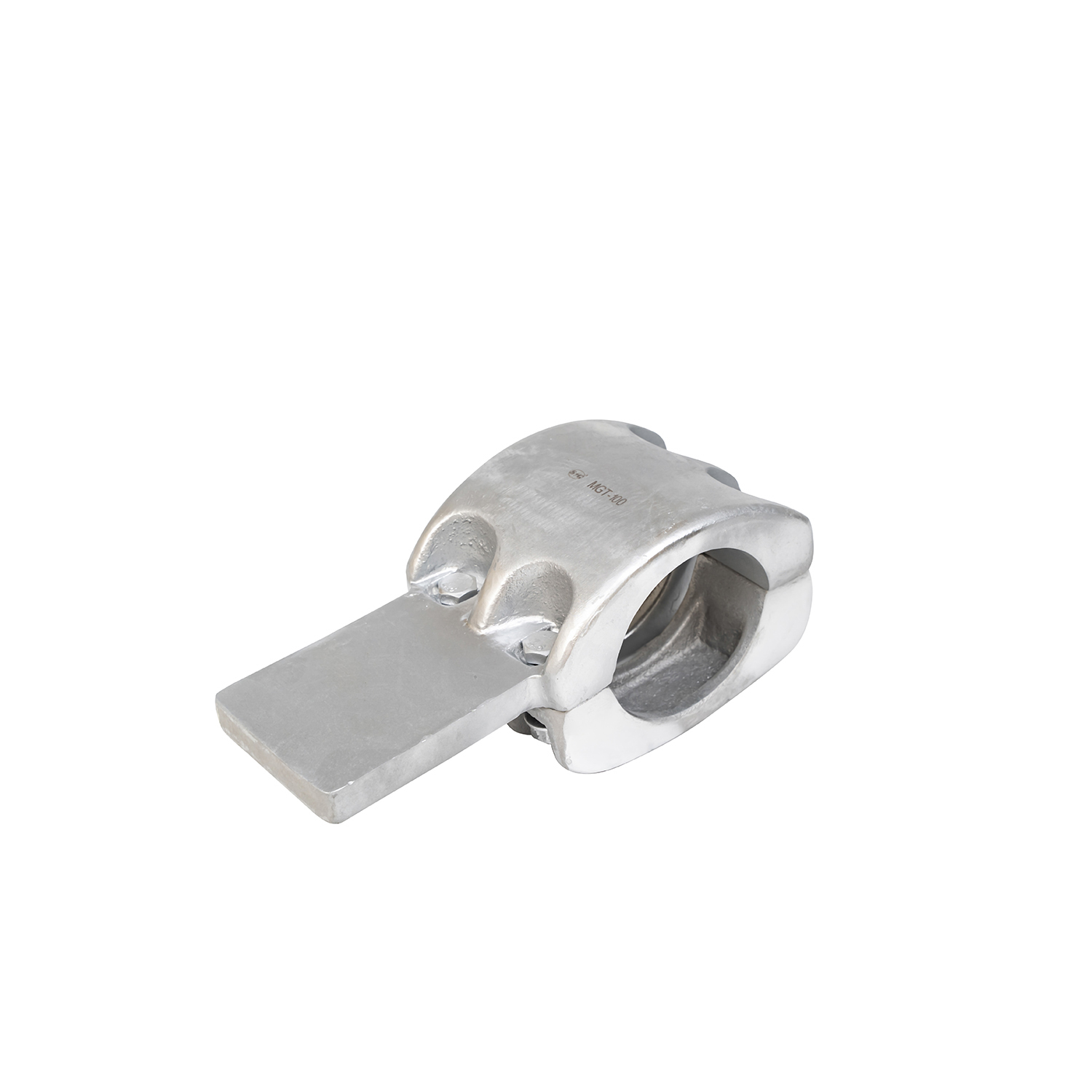
At the heart of this design is the split-hub architecture. Unlike solid fittings that require sliding over the end of a conductor, this unit is manufactured in two distinct halves. This split design is not merely a convenience for assembly; it is a functional necessity for retrofitting existing substations or linking sections of a busbar without total disassembly. The closure is achieved through heavy-duty bolt fasteners, which are key to maintaining consistent contact pressure. When electricity flows, the conductor heats up and expands. Conversely, during low-load periods or winter conditions, it contracts. The clamp must accommodate these dimensional shifts without loosening its grip. The robust fastener configuration in this model is designed to maintain a constant clamping force, preventing the cold-flow creep that often compromises aluminum-based connections.
The material composition plays a pivotal role in performance. The housing is cast from a high-strength aluminum alloy, chosen for its excellent combination of tensile strength and electrical conductivity. Casting allows for a smooth, continuous grain structure that minimizes micro-cracks, a common starting point for fatigue failure in vibration-heavy environments. Furthermore, the alloy’s inherent resistance to atmospheric corrosion ensures that the clamp remains functional over decades of exposure to moisture, industrial pollutants, or saline air, reducing the frequency of costly maintenance checks.
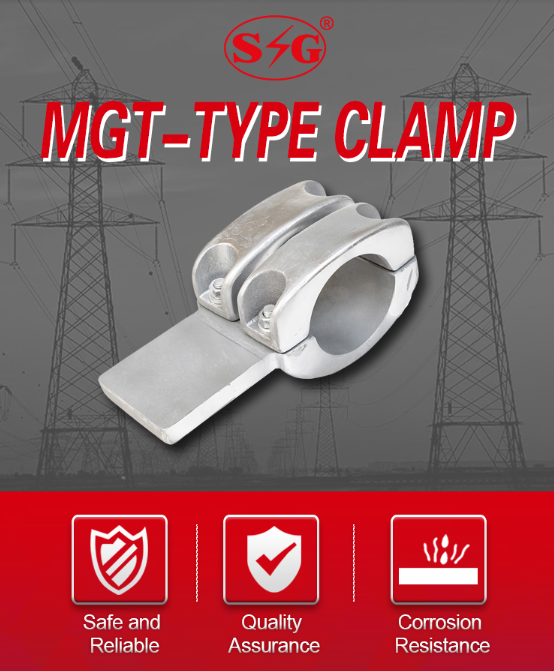
A distinctive feature extending from the main hub is the solid, rectangular flat terminal. This extension serves as a versatile landing zone for jumper connections, secondary circuit ties, or grounding links. The surface area of this flat pad is substantial, ensuring ample contact area for bolted connections. This is critical for minimizing the current density at the termination point, which in turn limits resistive heating. In high-load substations, “hot spots” at connection points are a primary cause of equipment failure. By providing a broad, flat surface with a smooth finish, the clamp facilitates a secure, low-resistance termination that dissipates heat effectively into the surrounding air.
Field experience has shown that the failure of busbar supports usually comes down to two factors: vibration loosening and thermal fatigue. This clamp design addresses the former by ensuring the fasteners are recessed into the casting, protecting them from direct weathering and reducing the leverage that vibration might exert on the bolt head. It addresses the latter by utilizing a stable geometric shape that distributes the mechanical load evenly across the circumference of the tubular bar. Rather than placing concentrated stress on a single contact point, the inner profile of the clamp creates a wide, continuous pressure band.
For engineers designing medium-to-high voltage switchgear, the choice of conductor hardware dictates the safety margins of the entire system. The adoption of this casting-based tubular clamp offers a predictable, reliable pathway for current flow. It removes the ambiguity often found in soldered or welded joints, providing a purely mechanical, field-replaceable connection that holds up under the most stringent operational demands. As the global grid expands into increasingly remote and environmentally challenging areas, the dependability of these components will continue to set the baseline for electrical service continuity.